April 29, 2010

Photo IQ - Week 1 -- Sensor Size and You

One of the comments that I hate more than anything when people see my images is, "You must have a really nice camera!" The implication is that the only thing standing between an amateur and a professional is the cost of their equipment. In picking a teammate for basketball, would you choose LeBron James or my uncle Earl? What if Earl had better shoes on and a nicer basketball? Yep, still LeBron. While there is a huge body of knowledge, skill, and experience that separate a true professional from an amateur, I admit that yes, I do have a really nice camera...and yes, it does make a big difference.
Here's why:
First humor me as I define the two types of cameras we're talking about here.
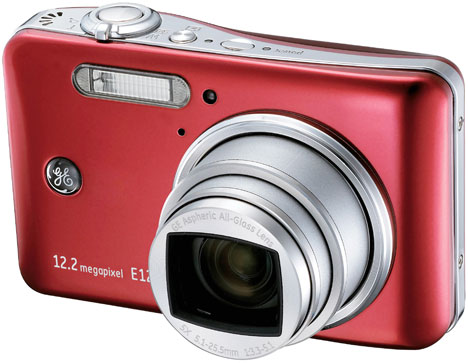
A "point and shoot" is the standard compact camera that makes up 80% of the cameras people carry around with them. They're designed to be compact, inexpensive, and easy to use. Most digital point and shoot cameras are designed to be used by framing the photo on the LCD on the back of the camera, many don't even have physical viewfinders anymore. Digital point and shoot cameras also have very few moving mechanical parts.
Here are some examples of point and shoot models:
pas
pas

A DSLR or Digital Single-Lens Reflex camera has interchangeable lenses, a mechanical shutter, and are designed for image quality, versatility, and speed. Despite recent changes, most photos with a dslr are taken while looking through a physical viewfinder.
DSLRs look something like this:
pas>

From the advent of digital cameras we have been conditioned to look at pixel count as the sole statement of quality on the cameras we buy. For years all camera marketing was geared towards more and more megapixels...at least until October of 2009. In October of last year Canon released their G11.

g11

The latest in their flagship point-and-shoot line had one very interesting difference from the G10, its predecessor--5 million FEWER pixels!
Whaaaaa?!? As your entire photographic world comes crashing down, realize that there is a method to Canon's madness and it leads us into the heart of today's issue.
The megapixel race is over.
Pixel number determines the physical size of the image, not the quality. 10 million pixels is around 3888×2592. To translate that to a full-resolution print it equates to capturing an image that is 13x8.5 inches. This means that anything you print smaller than an 8x10 you actually have pixels you don't even need. I've printed picture-perfect 30x40s from 10mp files. All cameras with 10 mp will print essentially the same sized image at full resolution.
The holy grail of megapixels was always 8. Eight million pixels is the basic equivalent of 35mm film so anything you could do with a 35mm negative you can do with 8 megapixels. That is the reason most camera makers have held at around 10.
The size of that standard 35mm frame of film is still the standard when it comes to sensors. A "full-frame" sensor refers to a sensor that is the same size as the classic 35mm negative. Typically, digital equipment is still measured in comparison to that standard.

The device on a sensor that captures the data is called a photosite. There's one photosite per pixel therefore if the camera has 10 million pixels, then it effectively has 10 million photosites.
The problem is that as you pack more and more photosites onto a sensor they need to get smaller and smaller and must be closer and closer together. This doesn't make a difference in size on your computer or in a print. (Pixels on your monitor are the same size and spacing regardless of the size of the original.)
Larger photosites absorb more light in the same period of time so they have more color data to work with and more dynamic range so colors are truer and stronger. Shadows become deeper and highlights keep detail in more extreme conditions. More contrast means clearer details and more depth to the image. Also, when the sensor is hit with electricity, the closer the photosites are to each other, the more heat is generated. Heat affects the way the photosite records data and translates into noise in the final image. So to go back to the G11, by only putting 10 million pixels on the same area that previously had 15 million you can have larger and more spaced--meaning cooler--photosites. That all comes down to better low-light and high ISO performance. Canon had decided to sacrifice quantity for quality.


What about my camera? I'm glad you asked. Below is a diagram of the typical sensor sizes for most of the cameras on the market:
I have removed a couple of the less-common sizes for ease in understanding the drawing. This diagram is not actual size but you can see the huge differences in the size of various sensors. (Actual size is further down.)

Sizes

For the purpose of visualization, we will imagine that each sensor has 10 million pixels on it. It is easy to conceive the difference in the size of the individual photosites between the different sensors.
The smallest sensor, the 1/2.5 (That means the diagonal is 1/2.5th or 0.4 of an inch) is the standard sensor for point and shoot cameras--about 80% of the cameras you see. Our example above, the G11 has the 1/1.7 sensor (or .6 of an inch diagonal.) That's the same 10 million pixels but they have a full 50% more space than the average point and shoot.
You get out of point and shoot models into the four-thirds system in cameras such as the Panasonic and Olympus 4/3 DSLRs.
By the time you get to the standard APS-C sized sensors in the majority of the Canon and Nikon DSLRs you have more than 13 times the sensor space for those same 10 million pixels. At Full Frame you are looking at 2.5 times the size of the APS-C and 35 TIMES the size of the standard point and shoot!
Another aspect of sensor size is the ability to shorten the depth of field to blur the background and get the beautiful soft background that is characteristic of professional portraits. To get the same depth of field at 100mm and f2.8 as a Canon 7D with an APS-C sensor a point and shoot must be at f0.8 which simply isn't possible and would be extremely expensive to make if it was.

If you're curious about the ACTUAL size of the sensors, they would be about this:

actualsize
 (Note: Cell phone camera sensors are much smaller than even the smallest sensor on this chart so hopefully that helps you understand why mobile phone cameras are so...uh...basic.)

To illustrate the concept, I've attached three photos from three different cameras with three different sensors.
These are each a pixel-to-pixel crop at 100%. All were shot at 10 mp and 800 iso. (800 ISO was chosen because it is a common choice for the auto setting in all three cameras and the differences are clearer at that sensitivity. All three sensors would look better at lower ISOs)


Canon Elph SD1100 - 1/2.5 Sensor (Standard Point-and-Shoot Sensor)

1/2.5

Canon G11 - 1/1.7 Sensor

1/1.7

Canon 7D - APS-C Sensor

APS-C

The noise difference is apparent as is the color saturation and the contrast. The last image is clearer, cleaner and has more depth to it.  
What do we learn from all this jargon and mumbo-jumbo? We learn that as a start in determining Image Quality, equipment matters. A valid way to take technically better photos is to spend more money. With that out of the way, in the rest of this IQ series over the next few weeks we'll discuss ways to improve your Photo IQ that you can apply on any camera.

So to sum up, this is your image...and this is your image on APS-C. Any questions?

For more information about exactly how all of this works, here is some homework:
http://www.cambridgeincolour.com/tutorials/digital-camera-sensor-size.htm

April 28, 2010

IQ means never having to say I'm sorry. - Photography Instruction Series

IQ. It's a touchy subject for some people. Well, not for me since mine's...oh wait...you mean IQ as in "Image Quality". Hmmm. Awkward.

Well, Image Quality is just as elusive as the much ballyhooed Intelligence Quotient. But as photographers, whether professional or amateur, we all want to know, "How do I get 'better photos'?"
Image quality is the general term for the overall TECHNICAL quality of the image. It doesn't take into account the subject or pose, just how well the technical aspects were executed. A lot of things go into it so it's really difficult to nail down but I'll give it a try.

What do we WANT in a photo?
I'd say that a photo is a quality image if it:
is focused
is well-exposed
has good color
has acceptable amount/quality of noise.

Regardless of the subject, I think most of us would judge the above image as successful...at least technically.

But there is still room for subjectivity. An image that was acceptable in quality to me five years ago may now be deleted without a thought. Part of that is due to experience, expectations, and ability and part of it is due to higher expectations from my equipment. While what you do in the camera has the greatest influence, image quality can also be effected after the fact in post-processing.

Some of the factors that contribute to image quality:

Sensor size
Lens quality
Exposure
Focus
Jpeg compression
White Balance.

I've had many requests for instruction on my blog and have been meaning to oblige for quite a while. I'm very happy to FINALLY be getting started!

For the next 6 weeks I will take one of the above contributing factors and lay it out in a blog post. I will welcome discussion and comments.
I'm going to post each topic on Thursday simply because that's the day I feel like doing it.
Hang out with me and build your photo IQ!

So tune in tomorrow to find out why size does, in fact, matter.

Later,

Jon

April 27, 2010

John + Maree, Part 1 - Manti Temple Ceremony

Manti-Temple-Wedding-Artistic-Photography

I've said it before and I'll say it again, we work with the coolest people! John and Maree came to us as a referral from another really amazing couple, Summer and JD. (Take a fond look back at THEIR engagements and wedding.)
From the very beginning John and Maree did something pretty amazing...they trusted me explicitly. They recognized early on that when we work together to come up with concepts and settings and ideas that are unique to them we end up with amazing work.
The best images come from collaboration. If the photographer does all the work, the images will be very strongly his/her style and most likely resemble closely other work he/she has done previously. Not necessarily bad but it's not how I roll.
If the bulk of the work is done by the client that removes the photographer from the mix and negates their wealth of knowledge and experience to a certain degree and lowers the overall quality and magic of the images.
When the client and photographer work together the vision becomes something that reflects and represents both parties and the product is something that could never have been achieved in any other way.
This formula in action is demonstrated in John and Maree's engagement session and Maree's bridals which I posted previously.
Anyway, John and Maree got married in the Manti LDS temple and had a small open-house that night. The next week they had a more formal reception (Can you say, awesome? I knew you could.) in St. George. Those images will be in Part deux tomorrow, so set those bookmarks!

For those of you on smart phones who can't see the slideshow below, click here to be whisked electronically to the facebook album.


See more at www.jonwoodbury.com

April 26, 2010

Corinne and Joe - UNDERWATER Engagements!

Underwater

Joe and Corinne met while they were both working at the Bountiful Recreation Center. They both love the water so we thought it would be fun to do their engagement session under water. (So dang cool!) We started in the park and then came inside and they jumped right in! AWESOME!!!

If you are unable to see the flash slideshow below, click here for the facebook album.


See more at www.jonwoodbury.com

April 23, 2010

The Cottam Family - Family Photography, Ivins, Utah

MAIN PHOTO

Aaronee and Vaughn were one of the VERY FIRST weddings I ever shot. They're some of our closest and dearest friends and we try to spend time with them whenever possible.
I'm SO excited that I finally got the chance to do a family session with them. They live in St. George, Utah and we were down there for a wedding in March so we did a family shoot in their new house then went outside to take advantage of the spring blossoms.
They LOVE the view of the red rocks from their east windows so we decided to incorporate the view into the photos as the backdrop. It's a hard thing to do to match the ambient light outside with artificial light inside but they turned out well. It's a fun idea and really highlights what they love about their new house.
The outside shots were basically a gift from the photo gods. We had this amazing, warm, sunset light from the perfect direction. It gave a very orange, comfortable glow to everything. I shot entirely available light (a rarity for me these days) and we just had a great time.

For the smart-phone crowd who can't see the slideshow below, here's the facebook album.

See more at www.jonwoodbury.com

April 21, 2010

If All Movies Had Cell Phones

We often don't think about the changes that have taken place in our world. If you're anything like me, you aren't even sure how you'd function without your smart phone. Well a cell phone would have definitely changed the plot lines on a few movies. (Not all the videos on the source site are family friendly so if you choose to watch more, don't say I didn't warn you.)


April 11, 2010

Like a Kid in a Candy Store

"To be like a kid in a candy store" (American & Australian)
To be very happy and excited about the things around you, and often to react to them in a way which is silly and not controlled.
In case you didn't know what that looks like, a photo of kids in a candy store.
We were not just in a candy store, we were in THE candy store, Hershey World in Hershey, PA. We were in Virginia for a wedding last summer and took a jaunt up to PA to visit Tom and Britta. This is my daughter, Hannah, and Ella, their daughter.

Kids & their candy

April 9, 2010

The Matrix, uh, Rebooted?

Everyone who knows me knows that I'm a Windows user and just fine with it but when something is funny, it's funny...and this is funny. Very well made.

April 8, 2010

My Uncle the Stud - Motorcycle Racing at the Miller Motorsports Park

MAIN PHOTO
Mark evaluates the task at hand.

It's such a breath of fresh air when you get to work on your own personal projects! Last summer I took a break from weddings and went out to the Miller Motorsports Park to shoot the Endurance Racing.
Teams of two ride for 90 minutes and whichever team records the most laps wins. It was so much fun! I'm going to try to go out there again this summer so if anyone wants to go with me I'd love the company!
I was mostly following the team of Mark and Jason Woodbury, my uncle and cousin. I believe they were 2nd place in points for the year. Jason caught his foot underneath the bike on a turn in the very first lap and couldn't go on. He usually races 2/3 of the time so it was a very tough physical feat for my 55 year old uncle. I was very proud to have been there. At one point near the end they took a break for a crash. You can see the fatigue on his face as he decided whether to go back out and finish the race. (Main image above) He did. He was a stud and scored enough points to keep them in the hunt for the title!

If you are on a smart phone or can't see the slide show below click here for the facebook gallery.

April 5, 2010

A Profound Lesson

Main Shot

This is Salt Lake Tribune Photographer Scott Sommerdorf. He taught me something pretty profound while I sat by him at the NCAA Elite 8. He was perched in the corner of the arena above the tunnel, quite a ways away from the contingent of photographers squatting down on the baseline under that basket. I made an offhand remark as I sat down, something like "What did you do to get banished clear up here?". I assumed there weren't enough places for him to be down with the privileged but that's odd since he's from the home-town newspaper. He answered that he had to beg them to be up there. I thought it was pretty odd that he'd WANT to be up away from the action when every other photographer was down close getting in the heat of the action.
(The mass of photographers down next to the basket.)
Main Shot

I hope I will remember his answer for a long time. He said, "All of those photographers will get basically the exact same shot. Some will time it better than others but for better or worse, mine will be different."
Amen, and thank you Scott.
He was also a really good guy. Check out some of his images from the tournament at the Salt Lake Tribune's site.

See more of my work at www.jonwoodbury.com
Related Posts with Thumbnails

Random Web-related Links

Jon Woodbury Photography

Jon Woodbury Photography is the choice for artistic, personal photography.

Visit Jon Woodbury Photography at OneWed.com & read a review of this wedding vendor & others.

http://alphainventions.com

blog directory