May 26, 2010

Elegant Bridals in Utah Valley - Blayr - Provo Castle Park

Bridals-Lake-water-reflection-wedding-photography-utah-county

Bridals-Lake-beautiful-reflection-wedding-photography-utah-county

Bridals-Lake-water-reflection-wedding-photography-utah-county

Blayr is one of the two Holmgren sisters I photographed last fall. I realized that I never posted her bridals on my blog and they are some of my favorites!
Click here to see her awesome vintage-inspired wedding. 
Blayr wanted a mixture of the classic sweet with the modern sassy.  With her graceful dress and feminine curls in contrast to the hot pink Steve Madden heels and cheeky daisy bouquet, it was so much fun to find locations to shoot that met the needs of both sides of her personality.  Castle Park in Provo proved to be the perfect space.  The stone castle overlooks the entire Provo valley and offered beautiful views, impressive structures, and even a lake where we shot on the dock.  It was a beautiful setting for a gorgeous girl! 

Photographically speaking, most images have a -1 ev fill from an off-camera speedlite in a Gary Fong Lightsphere.
In processing, I also played around with the Indian Summer filter from Nik Software. Way cool. It turns all your leaves into fall colors.
She had great shoes, too.

For those of you on smart phones who can't see the slideshow below, click here to be whisked electronically to the facebook album.


See more at www.jonwoodbury.com

May 24, 2010

Kosha Dillz - Hip Hop vs. The Great Salt Lake

Kosha Dillz-Hip Hop artist

Kosha Dillz-Hip Hop artist-amazing sky

Kosha Dillz-Hip Hop artist-great salt lake

Hip Hop artist Kosha Dillz came through town last week and did a session with Andrea Hanks. I went along for the ride and got a chance to shoot a few frames myself. We had a great time and Kosha was down to earth and a true gentleman. (He even had the time to save three starving kittens during the shoot!)
If you're not familiar with Kosha Dillz, I've embedded his video on VH1, "Cellular Phone" below.
Go see Andrea Hanks Photography's portfolio at http://www.andreahanksphotography.com Rocks.
Kosha's site:
http://www.koshadillzworld.com/

For those of you on smart phones who can't see the slideshow below, click here to be whisked electronically to the facebook album.


See more at www.jonwoodbury.com

May 20, 2010

This is NOT a Racial Post! - WHITE BALANCE - Photo IQ -- WEEK 4

I am going to start out this way, if you want the cheapest, easiest way to make more professional-looking photographs, THIS is it. White balance is extremely important in quality images.
I hear people all the time lamenting their out-dated cameras and low-grade lenses, wishing that if only they could get better gear, their photos would look better. To all of you I say, don't upgrade until you master white-balance. It will give new life to your images.

What IS white balance and why do I care?
White balance refers to the color cast given off from different light sources or picked up by light reflecting off various surfaces. It is measured in degrees kelvin. Typical temperatures of light are as follows.

Color Temp. Light Source
1000-2000 K Candlelight
2500-3500 K Tungsten Bulb (household variety)
3000-4000 K Sunrise/Sunset (clear sky)
4000-5000 K Fluorescent Lamps
5000-5500 K Electronic Flash
5000-6500 K Daylight with Clear Sky (sun overhead)
6500-8000 K Moderately Overcast Sky
9000-10000 K Shade or Heavily Overcast Sky

There is a range given because white balance is a very imprecise science when it comes to photography. It changes all the time with clouds and different colored light bulbs...in fact, very few lightbulbs are yellow enough to fall under the traditional tungsten range.

With film white balance was a matter of choosing indoor or outdoor film then using filters to equalize colors and remove a cast.
Digital is easier because we can switch whenever we want, set custom white balances, and in mid to higher-end dslrs custom-tune the temperature.

Why white balance?
Just pay attention to the photographs that really move you. They will very rarely have odd color casts. Our eyes are very good at compensating for white balance differences naturally so we don't usually notice it. That is why so many amateur photographers don't pay attention to it. But it is an elements that when it is done right will elevate your images even if viewers can't put their finger on the reason.

RAW vs. Jpeg
Shoot Raw. Okay, just kidding, you can choose what fits your style better, there are still a few photographers that shoot jpeg out of the camera (See Jerry Ghionis) but more and more the consensus is to shoot raw.
If you don't get it right on location, any editing you do later on is simply photoshop's guess as to what it should be. I prefer to shoot raw so the original data is preserved. Then in editing the program knows exactly how the color should be rendered with each tweak of the white balance slider.
If you are a jpeg shooter, white balance should be your obsession, if you shoot raw, it is still a time saver since getting it right saves time in editing but you can miss or forget to change it and there is no harm done.

I went into the last couple of weeks of shoots to find examples of white balance shifts so you can see the difference between an average white balance and a good white balance.

Below is Christian Burridge at the Salt Lake County Democratic Convention. The convention was held in a large multi-purpose room lit entirely with florescent lights. You can tell they're florescent by the characteristic green tone in the auto white-balance example on the left. It's not bad, per se, but you can see the difference in skin tone when the compensation was introduced. It's a much more pleasing, more professional-looking image. I love shooting men in suits and white shirts because white shirt collars are just about the best sample for white balance. They are minimally reflective and are near the face so they are almost always included.


The next example comes from an underwater set. Again we see the influence of the mostly florescent lighting. The corrected image (right) is much crisper and cleaner.


The next example is from a set I did with hiphop artist Kosha Dillz. I was there to assist the amazing Andrea Hanks but she let me do a little shooting on my own as well.
The cloudy, twilight sky (oooh, he said Twilight!) gives a naturally blue cast but I was mixing in a daylight-balanced flash. I actually wanted to warm up the skin tones so I moved the white balance towards yellow by shooting on the Cloudy setting. The goal was to warm up the whole scene and really pull out the yellow in the little sunlight left. I think that "true" white balance is not always the ideal. I like things a little warmer than normal. "Correct" white balance means neutral--and neutral is, well, neutral. It can feel very clinical and unemotional. I almost always cheat a little warm, especially when it comes to portraits. Typically, "correct" skin tones on men are too pink for me. Skin tones look much better warm than cool. The corrected white balance is on the right so you can see the difference and judge for yourself. 


So how do you set white balance?
Every camera is different but typically you go into your menu and choose the one that is closest to your conditions. Some preset white balance settings are good. some really aren't. Auto white balance typically works pretty well and is a good choice most of the time but will be fooled by scenes where there is one dominant color, such as a frame full of autumn leaves. The camera will see an overall red/orange color so it will compensate by moving the temperature towards blue. I keep my camera on daylight/sunny balance most of the time. By NOT using auto white balance I at least have consistency in my images and if I need to correct them I can often apply the same correction to many images, saving me time. That only works in a situation where the color cast is consistent. I will go to auto if the white balance is changing often.
The Kelvin temperature comes into play when the preset values don't work. For me, this is almost always in an artificial incandescent situation. MOST tungsten/incandescent presets are too blue because they use the same temperature settings that have been used for years and years. The problem is that we aren't using the same bulbs we've used for years and years. Light bulbs have moved closer to daylight temperatures so often the tungsten setting will be overkill and be too blue. I keep my Kelvin selector at about 3100 degrees so I can flip over to it when the tungsten setting doesn't work.
Custom white balance is set by shooting a frame of a neutral colored subject then telling the camera that whatever is in that particular frame is the base neutral color. The camera then calibrates that color as neutral and bases all the other colors on that neutral example. For setting custom, gray is actually used more often than white.
I will cover using custom white balances for creative effect in a future Photo IQ post. It's really fun.

In this Photo IQ series I have tried to give a general overview of concepts that contribute to Image Quality. I can't cover everything and have tried to keep them like a woman's skirt, long enough to cover the subject but short enough to keep things interesting. I will expand on some of these concepts in future posts. Feel free to comment or email me with question or suggestions for topics. I've already gotten some great requests!

I hope you're enjoying the series! I have had a good time writing them and have had amazing feedback so far. Thanks for reading!

Next week's Photo IQ: Focus.

May 17, 2010

Young Love...Fashionably Late -- Janna + Dave, Manti Temple

Manti Temple - Artistic Wedding Photography

To see the full event or purchase images from this amazing, artistic, classy wedding, click right here.
Janna and I have been friends for a very long time. She was one of my best friends in high school and we have stayed good friends through many, many good times and a few bad. She is one of my favorite people on the planet.
Dave and Janna met at Snow College in 1994 and actually dated clear back then! They both went their separate ways only to have everything come full-circle 15 years later. They are live in the Washington DC area and having the time of their lives.
I was honored and privileged to shoot their wedding. I loved everything we did and just had an amazing time. Janna has an incredible family and we had a great time. I was also excited to be able to shoot the reception with the incomparable Andrea Hanks. Congratulations, Janna and Dave!
Janna's Bridals at the Union Station in Ogden.
Dave and Janna's Engagements in downtown Salt Lake City.


For those of you on smart phones who can't see the slideshow below, click here to be whisked electronically to the facebook album.


See more at www.jonwoodbury.com

May 15, 2010

The Camera of the Future TODAY...and there's a STAR WARS Edition!

The new Canon SD4000.
PDN reported on a special edition of Canon's new killer ELPH point and shoot camera.
It's a significant step forward in point and shoot cameras because it uses a CMOS sensor instead of the older, lower quality (and universal) CCD so the low-light performance improves right off the bat. It also shoots over 8 frames a second! Between that and the blink detection, you'll definitely get the shot of your kid you've been missing.
The SD4000 also shoots 720p HD video with stereo sound and has a maximum aperture of 2.0.
The camera will retail for $350--frankly, I thought it would be more.
The Storm Trooper Edition will be limited to 200 and will be available only at the Canon E-store (www.shop.usa.canon.com) at the end of May. Shouldn't they have launched it on May the Fourth?
Click here for the official announcement and product pages on CanonUSA.com.

Canon-DS4000-camera-storm-trooper

Canon-DS4000-camera-storm-trooper-at-at

See my portfolio at www.jonwoodbury.com

May 13, 2010

Photography--EXPOSED! - Photo IQ - WEEK 3

Yet again, I have bitten off a huge chunk of photographic goodness and I will chew it up and hand it back to you in nice, pre-masticated, understandable bite-sized pieces.

How does exposure affect image quality? That is the question of the day...or the week.
Exposure, simply put, is the amount of light that the digital sensor (or the film) absorbs. It is determined by three things:

1. The length of time it is exposed to the light. Measured as Shutter Speed
2. The amount of light that comes in at once. Measured as Aperture

3. The sensitivity of the sensor (or film.) Measured as ISO

The Analogy:
Imagine your sensor (I'll stop saying film every time, you know who you are.) is a bucket. Like this one that my wife Lori uses to put flowers in before she builds the most beautiful wedding bouquets on the planet. (How was that for a shameless plug? You really should go to her website, though.)


Your light meter/camera meter gives you the proper exposure, visualized by a line on the side of the bucket. We'll say that it is 2 liters. That is the correct amount of light/water for the scene. You have two factors that go into filling the bucket. How much water you pour in at once, and how long it takes you to pour in the water.
In the end, it really doesn't matter whether you dump the entire 2 liters in at once or whether you run a hose and fill it up slowly. In the end, you still have 2 liters of water in the bucket.

Think of the amount you dump in at one time as the aperture and the length of time it takes you as the shutter speed. Keep the analogy in mind as we go over the parts.


How do you measure light?
We do it in "stops". Stops are not nearly as difficult as most people make them out to be. One stop up is double the amount of light and one stop down is half. Pretty simple.

1. Shutter speed is measured as a fraction of a second, 1/8, 1/60, 1/1000. Half the amount of time, is one stop different. It's one stop brighter (double the light) when you move from 1/125 of a second to 1/60 of a second. The standard stop measurements go from 1/60 up and down, ex 1/30, 1/15, 1/8. 1/4 and 1/125, 1/250, 1/500, 1/1000, etc.You can see how each is either double or half the amount of light of the one above or below it. Modern cameras allow either one or two increments in between each full stop--it can be more confusing, many photographers don't even know what the official stops are.
There are no absolutes with shutter speed because how much light you get in that amount of time is based on how much is available and how much is coming in at once.
Shutter speed affects Image Quality mostly by controlling movement. If you shake the camera or your subject moves while the shutter is open, the image comes out blurry. Both the camera and the subject will move much less in 1/500 of a second than they will in 1/8 of a second. Typically, faster speeds will yield crisper, sharper images. With image stabilization on lenses photographers often just make a blanket statement that now that camera shake is minimized they can shoot at very slow shutter speeds. True, but you have to be aware that your subjects, be it people, animals, or even trees, move.


2. Aperture is measured in f-stops. It's a complicated equation (and a whole different blog post) to get the numbers but it boils down to each number being double the size of the one below it--therefore letting in twice as much light. (starting to get the pattern?) The traditional standard stops are 2.8, 5.6, 8, 11, 16, 22 etc. Each is one stop different from the one next to it. Again, modern cameras allow you to choose whether you want one or two options for apertures in between these standard ones.
The difference between aperture and shutter speed is that an aperture is always the same amount of light. So 2.8 on my 7D is the exact same amount of light hitting the sensor at one time as 2.8 on my G11 point and shoot. Remember that, it makes using flashes MUCH easier later on.
The main effect on Image Quality from aperture is depth of field. It's an amazing artistic tool but if you want a 3-foot-deep object entirely in focus and you're shooting at 1.8 and 50mm, you're looking at about one inch that will be in focus. Typically it takes 5.6-8 to focus an entire group of people 3 lines deep.

3. ISO is not really reflected in the bucket analogy. If you have ideas on how to use it, let me know. I toyed with using it but it just complicated things.
ISO is basically the measurement of the sensitivity of the sensor or how quickly it absorbs light. In the good old days of film, ISO was determined by the film you used. It was difficult to change film in the middle if you were outside using 100 iso film then went inside where you would need 800 to get any light at all. Digital is awesome. Now all you have to do is switch the sensitivity to wherever you want it.
ISO effects Image Quality with noise, mostly. The higher your ISO, the faster shutter-speeds you'll get, but with that extra speed you pay the price in noise. Not all noise is bad. I actually like the texture you get from a little noise, the question is what kind of noise. Vast improvements have been made in the look and feel of noise at higher isos. For example, I hated anything above 800 iso on my 40d but even though there is still quite a bit of it at 6400 on my 7D it is more pleasing and I actually mind it less. It doesn't interfere with the shapes and lines in the image like the ugly digital-looking noise did before.
Frankly, images will almost always look better at higher isos and correct exposure than they will under-exposed at lower isos.


That's basic exposure. The simplicity is maddening.  I will expand on all of these as time goes by.

Next week: White Balance...my arch nemesis.

May 12, 2010

The Sinister World of Dingbats and WhingDings or This Font Smells Funny

We all have our favorite fonts, I know I do. I'm partial towards Georgia and Myriad Pro. (Can't we all agree to stop using Papyrus? You know who you are.)
But some fonts are just trouble...


May 10, 2010

Christian Burridge for County Council - 2010 Salt Lake County Democratic Convention


MAIN PHOTO

A good friend of mine, Christian Burridge, ran for county council. He is a good man. (I was going to add, "despite being a democrat" but I'll just leave it at good man.) I went and covered the convention. He didn't make it through the convention but I'm sure he will rise again like the phoenix he is.
Photographically, this was fun. No pressure for certain shots an I got to really see what my 7D could do. All of the inside images were shot at least 3200 ISO--some at 6400! I LOVE the high-iso on this camera. It still has noise at the higher settings but the noise looks good. 1600 iso on my 40D looked awful. It felt digital and forced. 6400 on my 7D feels more like film grain. it doesn't affect the overall quality and usability of the images. It's great.
Aside from that, florescent lighting is always awful but with a custom white-balance and not adding flash (mixed light is worse than bad light) they look good.

For those of you on smart phones who can't see the slideshow below, click here to be whisked electronically to the facebook album.


See more at www.jonwoodbury.com

May 6, 2010

Lens Quality - Photo IQ - Week 2

There are a lot of lenses out there...a lot. How do you decide which to buy and what the heck the difference is?
Famed wildlife photographer and prolific podcast czar Scott Bourne always says that photography is about compromise. Nowhere is this more evident than when dealing with lenses.
THE perfect lens, doesn't exist but YOUR perfect lens might.
(Scott Bourne also says that 99% of lenses are better than 99% of photographers but I digress.)

Lenses for Digital SLRs range from about $100 all the way up into the thousands of dollars. For the most part you get what you pay for but there are options no matter what your budget.
The main goal of any lens is sharpness. You want to get a lens that will be sharp at the sizes that you are printing. The smaller you print, the less you need something ultra-sharp.
For quality, I would definitely choose a more expensive lens with a lower cost camera than vice-versa. Think about it. If you have a $7000 camera but put a $100 lens on it, your photos can only be as sharp as the lens is! The other advantage to investing in lenses is that they can move up as you upgrade to a better and better camera.

So let's dive in.

The factors that contribute to price are:
1. Build quality
2. Complexity
3. Size
4. Features

1. Build Quality.
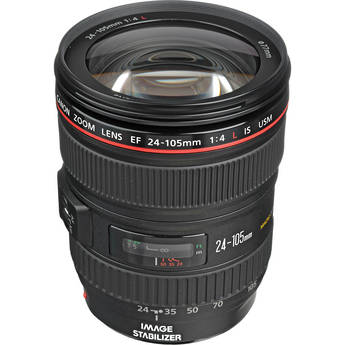
    Professional grade lenses (with Canon it's the ones with red lines around them) are built tougher. That doesn't necessarily mean durability, although that factors into it too, cheaper lenses are often made of plastic versus metals and other composites.

Mechanically, higher quality lenses have internal focus and internal zoom. When a piece moves in and out it is difficult to seal effectively so there's room for dust to invade the internal workings of your lens. The push and pull also tends to suck the dirt in. Internal movement means that all the physical movements are encased in the lens. It doesn't physically expand outwards either to zoom or to focus. It's more complex to build (That's number 2) so that makes it more expensive but it also allows for better sealing. If you often shoot in dusty or dirty environments you'll ruin less sturdy lenses by getting sand inside them. Even with normal wear and tear you'll most likely get dust in your lenses if they have external movement but that isn't necessarily a problem for casual users since it typically doesn't have a great effect on the quality of the photos you're taking.
The other factor of build quality is the simple quality of the glass used in the lenses. Here again, you can't really fake it--better is better.


See how the barrel moves out of the body.


Where this lens stays the same size regardless of the focus or zoom.


2. Complexity.
   The more parts and engineering it takes to create a lens, the more expensive it will be. This is an area where you can REALLY get quality for a steal.
At the consumer level, you often see lenses with huge zoom ranges like 18-300. It's really handy to not have to switch lenses but mechanically, it's impossible to have the same quality with that kind of complexity. In the move from a wide angle like 18mm to a long telephoto like 300mm it is very difficult to control the refraction of light. You'll rarely see pro-quality lenses with those ranges because you simply can't maintain high quality throughout the length of the lens. There's more leeway in a zoom from 70-300 because it doesn't have to pull double duty as a wide-angle as well. So just know that with the convenience of a single lens comes a sacrifice in image quality. Which leads us to...primes.
This is where you can really leverage your money and get high-quality glass for a much lower cost.
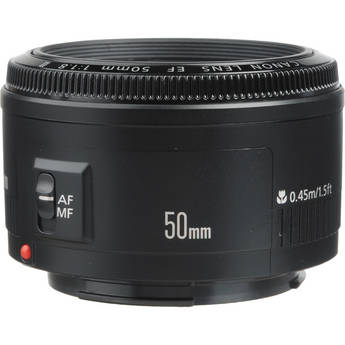
A prime lens is a lens that doesn't zoom. It is a single focal-length--a common choice is 50mm. With no mechanics at all for zooming, you get a much simpler, cleaner lens with fewer elements driving the cost of design and manufacture down considerably. Many high-end photographers use nothing but primes because the light is so much more controlled and less diluted...and in a prime lens you can get much, much better lenses for so much less $$$! Most pro series zoom lenses run about $1000-$3000 while quality primes run $300-$800.
Even at the low end you'll get much better lenses for less money.
When I first started, I bought two $100 lenses, the Tamron 70-300mm f4-5.6 and the Canon 50mm 1.8 prime. Both were made of plastic.


I used the 70-300 zoom for about a month before I realized that the quality simply wasn't good enough while the 50mm never left my bag until a few months ago when I was shooting with it for fun and the camera was stolen. (I have missed it.) You simply can't make a 70-300 zoom with any quality for $100 but that prime was sharp as a tack! (I won't go in to f-stops now but you also get 4 times more light at the same shutter speed with the prime.)

3. Size
   Size matters here too. The bigger the front opening, the more light that gets in at once. You'll see consumer lenses with diameters of 52-58mm. You can only get so much light in those at one time. As you get larger, (77mm is standard for most pro lenses), you get much more light but you also get much more expensive, larger pieces of glass. It also becomes far more expensive for filters.
Size doesn't have a large impact image quality, just cost.

4. Features
   Features definitely affect image quality. Image Stabilization (Nikon calls it VR, Sigma-OS, etc.) is a very common feature these days and can be a huge help in controlling motion blur, especially in low light. IS basically uses a gyroscope and tiny motors to compensate for your shaky hands by moving the lens elements the opposite way of the shake. It helps.
Other features include:
- Lens Coatings: layers of stuff coating the lenses to control lens flare and that ugly purple, blue, and red fringing you get in high-contrast situations. Definitely affects the quality of your images. It's not fun to take out and higher-end lenses give you much less of it.
- Ultrasonic Focus Motors: Uses vibration to auto-focus instead of moving motors. Doesn't really affect image quality directly but quieter, faster, more efficient auto-focusing is definitely going to get you better photos, especially of moving subjects like children and athletes.
- Tilt-shifts: Lenses designed to change the plane of focus to compensate for perspective, usually used in architecture but also can be very creative and dynamic for portraits. For examples of tilt-shift in portraits check out Julie Parker. She's great.
- Auto-focus override: Typically used in sports, it allows you to manually move the focus and override what the camera chose without changing the focus mode to manual. It's quite complicated mechanically. Personally, I never use it but I'm sure it's indispensable for somebody.

So there you go. Hopefully this info will help you make an informed decision on what is really one of the biggest factors in Image Quality.
Next week's topic? Exposure.

May 4, 2010

10 Reasons You Need an Amazing Portrait - Portrait Photographer

I've been thinking a lot lately about how powerful a great portrait is. I've had people hire me for so many different reasons it often blows my mind. As I thought about the past few years as a photographer I got all choked up with emotion remembering the different individuals and families that have changed how I see myself and the world. With cameras all over the place and 50% of the planet opening photography "businesses" it is an ever-growing privilege to be asked to create art with incredible people.
It made it easy to come up with 10 reasons that it's worth it to get a really amazing portrait.


See more at www.jonwoodbury.com
Related Posts with Thumbnails

Random Web-related Links

Jon Woodbury Photography

Jon Woodbury Photography is the choice for artistic, personal photography.

Visit Jon Woodbury Photography at OneWed.com & read a review of this wedding vendor & others.

http://alphainventions.com

blog directory